
 By EA NEXT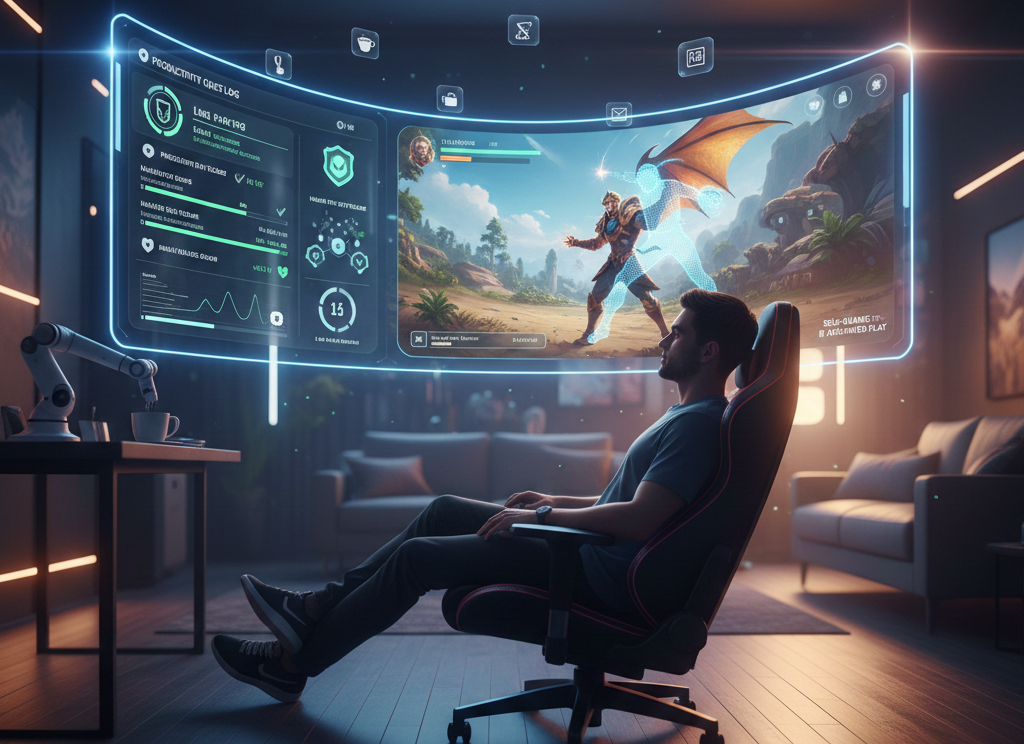
Self gaming is a dual-concept digital trend involving self gaming (titles that progress with minimal or zero player input) and self-gamification (applying game mechanics to personal life for productivity). By 2026, the rise of AI-driven “Ghost Players” and automated progression has turned gaming into a tool for both relaxation and life-optimization.
The landscape of digital interaction has shifted. In 2026, the term Self gaming has emerged as a critical pillar of the “quantified self” movement and modern entertainment. It represents the intersection where gaming stops being a chore and starts being a partner in progress. Whether you are letting an AI “Ghost Player” handle a repetitive grind in a AAA title or using RPG-style level-ups to track your morning workout, self gaming is redefining what it means to “play.”
To understand self gaming, one must distinguish between the technology of the game and the psychology of the player. (According to industry standards in 2026, the term is categorized into two primary streams):
- Passive Entertainment (Self-Playing Games): Utilizing automation, AI, and “idle” mechanics to achieve in-game progress while the player is offline or performing other tasks.
- Active Life-Optimization (Self-Gamification): The intentional design of one’s own life as a game, using feedback loops, “prestige” systems, and rewards to drive real-world behavioral changes.
Also Read :Slot 777 Jogos de Cassino: Guia Completo sobre Slots Clássicos e Onde Jogar
| Feature | Self-Playing (Idle) Games | Self-Gamification (Productivity) |
| Primary Goal | Entertainment & Passive Growth | Behavioral Change & Productivity |
| User Input | Low (Occasional check-ins) | High (Active task completion) |
| Core Mechanic | Exponential growth/Autoplay | Points, Quests, and Life-Levels |
| 2026 Tech | AI “Ghost Players” & Machine Learning | Wearable integration & Bio-feedback |
Self gaming is a method of digital engagement where game mechanics are either automated or applied to real-life tasks. It encompasses self-playing (idle) games, which use AI to progress without constant user input, and self-gamification, where individuals use game design elements like “leveling up” to improve real-world productivity and habit formation.
- AI Integration: Modern self-gaming leverages Sony’s “Ghost Player” style AI to assist or complete difficult game sections.
- Mental Health: Passive gaming is increasingly used as a “digital breather” to reduce cognitive load while maintaining a sense of achievement.
- The “Gameful” Mindset: Leading experts like Victoria Ichizli-Bartels suggest that treating life as a game (self-gamification) reduces the stress of failure by reframing it as a “respawn” opportunity.
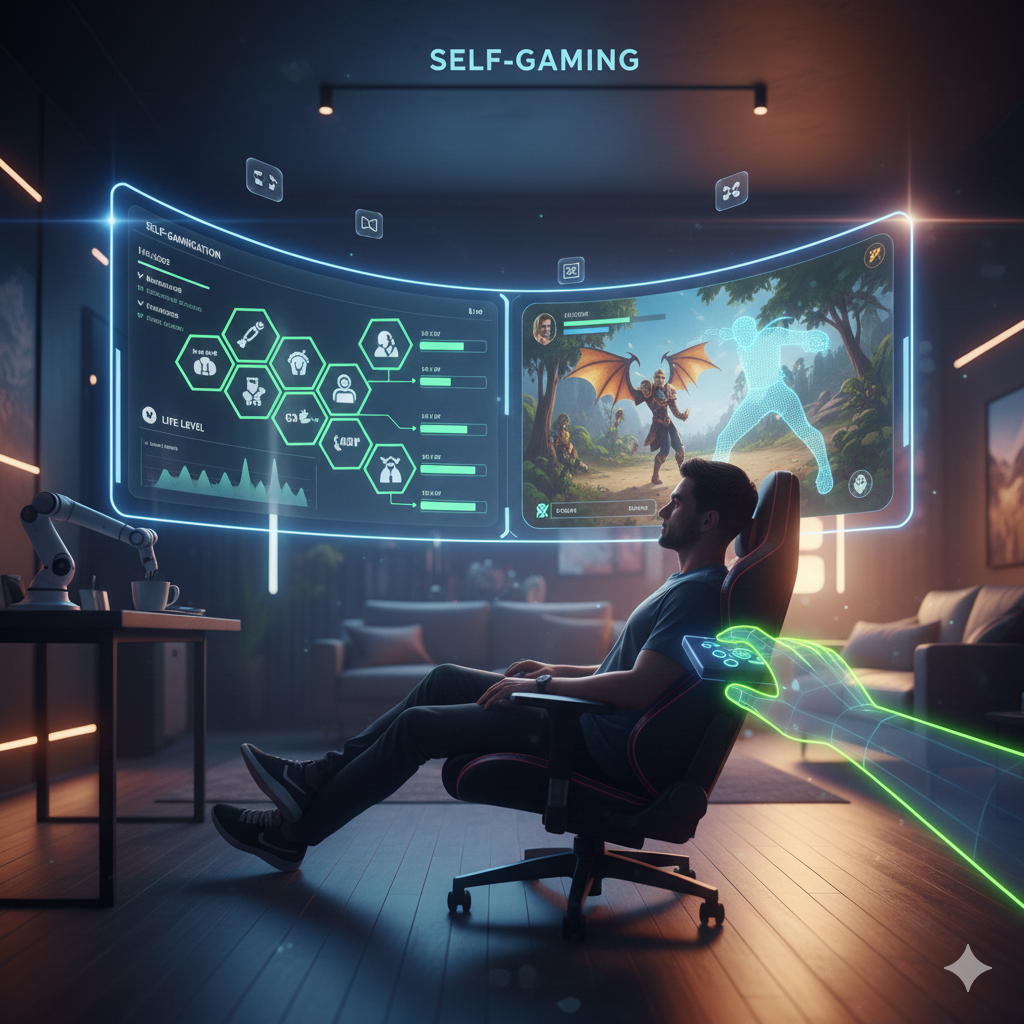
In the current landscape of 2026, self-playing games—often categorized as Zero-Player Games (ZPG) or Idle Games—have moved beyond simple clicking. These games are defined by a shift in player agency: instead of direct control, your role is that of a manager or strategist. You set the initial parameters, and the game’s internal logic (or “algorithmic agents”) handles the execution.
Also Read : Scorching Slots Review 2026: Is This Fire Casino Still Hot?
The appeal of self-playing mechanics lies in the satisfaction of optimization. (According to industry behavioral data…), players experience a consistent dopamine release from “cozy progression”—seeing numbers grow and systems improve without the stress of constant manual input. This “hands-off” approach serves as a digital breather, allowing for a sense of achievement that fits into a busy lifestyle.
Modern self-playing games utilize three primary mechanical pillars to keep players engaged:
- Exponential Growth Loops: You start with small manual actions (like tapping) that earn currency, which is immediately reinvested into automated producers (e.g., “Grandmas” in Cookie Clicker or “Managers” in AdVenture Capitalist).
- Prestige Systems: A “soft reset” mechanic where you sacrifice current progress for permanent, powerful multipliers. This ensures the game remains challenging and rewarding over months or years.
- Offline Progression: Advanced “Away From Keyboard” (AFK) mechanics calculate progress while the app is closed, rewarding you for the time you don’t spend playing.
Also Read : Best Online Pokies Real Money: Top-Rated Australian Sites for 2026
The most significant shift in 2026 is the integration of AI-Driven Ghost Players. Sony recently patented a system that allows an AI agent to take over a player’s character during difficult or repetitive sections.
| Mode | Function | Use Case |
| Guide Mode | AI renders a “ghost” overlay to show the optimal path or solution. | Solving complex puzzles or finding hidden items. |
| Complete Mode | AI assumes full control of the controller inputs to finish a segment. | Bypassing a “boss wall” or finishing a grind-heavy quest. |
This technology uses machine learning trained on millions of hours of gameplay from platforms like YouTube and Twitch to mimic human-like movements and strategies.
| Feature | Classic Idle Games (e.g., Egg, Inc.) | AI-Enhanced Autoplay (e.g., Sony “Ghost”) |
| Mechanic | Hard-coded math/incremental loops | Neural-network-based behavioral cloning |
| Control | Zero to Low (Tactical UI only) | Dynamic (AI mimics player skill) |
| End Goal | Numerical “Prestige” and unlocks | Story progression and boss completion |
Key Takeaway: Self-playing mechanics are no longer just for mobile clickers. In 2026, they are a legitimate accessibility and convenience feature in AAA titles, allowing players to outsource “the grind” while retaining the “glory” of the story.
Sony Patents Ghost AI That Plays Whole Game for You!
This video explains the technical details and public reaction to Sony’s recent “Ghost Player” patent, which is a major milestone in the evolution of self-playing mechanics.
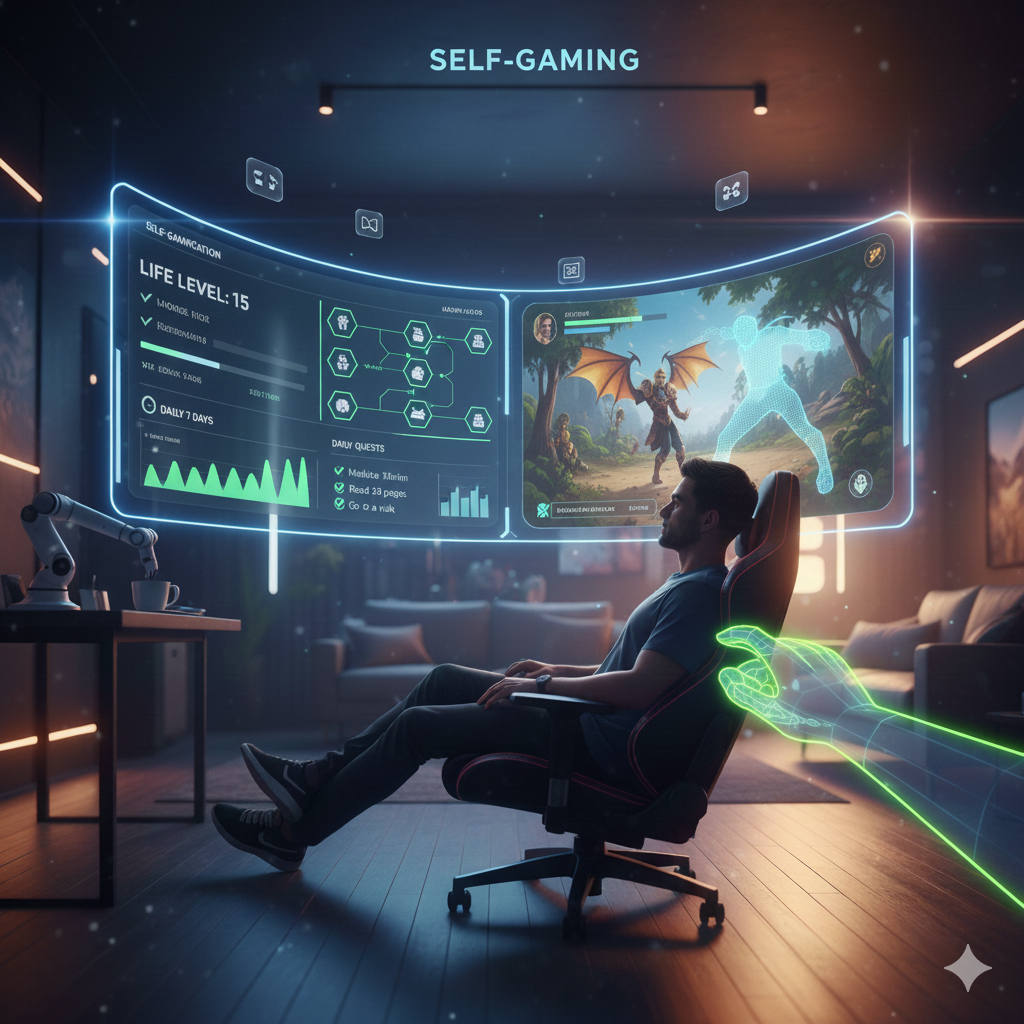
While self-playing games automate entertainment, self-gamification is the practice of applying game design to your real-world “meatspace” activities. In 2026, this has evolved from simple to-do lists into a sophisticated self-help methodology. (Based on frameworks pioneered by experts like Victoria Ichizli-Bartels…), self-gamification combines anthropology, the Kaizen philosophy of continuous improvement, and game mechanics to make personal growth effortless.
Self-gamification works by shifting your perspective from a “worker” to both the Game Designer and the Player.
- The Designer: You create the rules, the quests, and the rewards.
- The Player: You execute the tasks and experience the satisfaction of the win-state.
This dual role reduces the “resistance to start” (procrastination) by reframing chores as voluntary challenges. If you fail a task, you don’t “fail at life”; you simply haven’t beaten that level yet and need to adjust the difficulty—just as you would in a video game.
The most effective self-gaming systems in 2026 rely on Kaizen-Gamification. Kaizen is the Japanese principle of “change for the better” through small, incremental steps.
- Small Quests: Instead of “Clean the House” (a boss fight), you create a “5-Minute Surface Sweep” (a mini-game).
- Anthropological Observation: You observe your own habits without judgment, like a scientist studying a player’s behavior, to see where the “bugs” in your routine are.
| App Name | Genre | Best For |
| Habitica | RPG Productivity | Turning habits into monster battles and gear upgrades. |
| Forest | Idle Focus | Growing a digital forest by staying off your phone. |
| Zombies, Run! | Narrative Fitness | Converting neighborhood jogs into escape missions. |
| Daylio | Mood Tracking | Gamifying self-awareness through color-coded icons and streaks. |
| Beeminder | Hardcore Commitment | “Stakes-based” gaming where you lose money if you miss a goal. |
To gamify your life, break down goals into Specific, Measurable Quests (e.g., “Do 20 pushups” instead of “Get fit”). Assign XP or Points to these tasks, track your progress visually using Streaks, and reward yourself with Unlockables (like 30 minutes of guilt-free gaming) upon completion.
Pros:
- Instant Feedback: You see progress in real-time through bars and levels.
- Reduces Burnout: Replaces high-pressure “goals” with playful “missions.”
- Consistency: Streak mechanics leverage the psychological “Don’t Break the Chain” effect.
Cons:
- Over-Quantification: The risk of focusing on the “points” rather than the quality of the activity.
- Extrinsic Reliance: If the app stops working, you might lose the motivation to continue.
Key Takeaway: Self-gamification isn’t about working harder; it’s about making work feel like play. By using the “Small Wins” strategy of Kaizen, you can bypass the brain’s fear of big changes and build lasting habits.
As of 2026, the distinction between “playing a game” and “managing a game” has blurred significantly due to advancements in Generative AI and Reinforcement Learning. Automation is no longer just for niche idle titles; it has become a core architectural layer in mainstream gaming.
A major milestone in 2026 was the public activation of Sony’s “Ghost Player” system (based on a 2024 patent). This AI-driven assistance tool is designed to prevent player churn—the moment a player quits a game due to frustration.
- How it Works: The AI is trained on millions of hours of successful gameplay from the PlayStation Network, YouTube, and Twitch. When a player activates the “Ghost,” the AI analyzes the specific game state and generates an in-game overlay.
- Modes of Engagement:
- Combat Mode: Shows the exact timing for parries and dodges using visual “ghost” silhouettes.
- Exploration Mode: Highlights hidden paths or optimal routes for speedrunning.
- Complete Mode: The AI takes full control of the inputs to beat a specific boss or navigate a difficult platforming section.
In addition to playing the game for you, AI is now building the game as you play.
- Dynamic Difficulty Adjustment (DDA): AI agents monitor your heart rate (via wearables) and performance to tweak enemy behavior in real-time, ensuring you stay in a state of “flow” without hitting a “burnout wall.”
- Procedural Content Generation (PCG): In self-gaming titles, AI creates new quests and environments tailored specifically to your previous successes, meaning your “idle” progress never actually reaches a hard cap.
The shift toward automated and gamified living has created a new set of psychological benchmarks for well-being and productivity.
(Based on 2025 research from the Oxford Internet Institute…), self-gaming provides a unique form of cognitive recovery. Passive gaming allows for “micro-achievements” that provide a sense of agency and progress without the high-stakes stress of competitive play. This makes it an ideal tool for individuals with high-stress jobs or those seeking to reduce anxiety through predictable, rewarding feedback loops.
However, experts warn of the “Gamification Trap.” When every aspect of life (sleep, steps, water intake) is assigned a point value:
- Extrinsic Overload: You may stop enjoying the activity for its own sake and only do it for the “ding” of the notification.
- Burnout: The pressure to maintain a “perfect streak” can lead to anxiety if a single day is missed, turning a helpful tool into a source of stress.
| Goal | Recommended Tool/Method | Initial Setup Time |
| Productivity | Habitica: Create 3 “Daily” tasks and 1 “Boss” goal. | 15 Minutes |
| Relaxation | Egg, Inc. or Cookie Clicker: Classic idle loops. | 5 Minutes |
| Fitness | Zombies, Run!: Start with “Mission 1” during a walk. | 2 Minutes |
| AI Assistance | PS5 Game Help: Toggle on “Interactive Hints” in settings. | 1 Minute |
Self-gaming is the ultimate expression of asynchronous progress. Whether it’s an AI agent helping you conquer a boss in a virtual world or a habit-tracker helping you conquer procrastination in the real one, the goal is the same: to remove friction from the path of growth. As we move further into 2026, the most successful “gamers” will be those who master the art of choosing when to play—and when to let the game play itself.
1. Is self-gaming considered “real” gaming?
Yes. In 2026, the definition of gaming has expanded to include “Management-style” play. Designing a system that progresses efficiently is considered a skill in its own right, often categorized under “Theorycrafting.”
2. What are the best apps for self-gamification in 2026?
Currently, Habitica remains the gold standard for RPG-style tracking, while Forest is the leader for focus-based gamification. New AI-driven apps like FocusMate AI are also emerging.
3. How does AI enable self-playing games?
AI uses Reinforcement Learning (learning through trial and error) to find the most efficient ways to earn rewards in a game, which it then executes on behalf of the player.
4. Can self gaming improve workplace productivity?
Absolutely. Many corporations now use “internal self gaming” platforms where employees earn badges and “level up” for completing training modules or hitting KPIs, though the ethical balance of “forced play” remains a topic of debate.
5. What is the “prestige system” in idle games?
It is a mechanic where you reset your progress to zero in exchange for a permanent multiplier (e.g., +10% speed). This allows for infinite growth and long-term engagement.
6. Is there a difference between “self gaming” and “solo gaming”?
Yes. Solo gaming refers to playing alone against the computer. Self gaming refers to the automation or gamification of the experience itself.
- Sony Interactive Entertainment, “AI-Generated Ghost Player for Gameplay Assistance,” U.S. Patent (Published Jan 2026).
- Ichizli-Bartels, V., “Self-Gamification Happiness Formula,” Gameful Life Press.
- Oxford Internet Institute, “The Impact of Passive Play on Adult Stress Recovery” (2025).
- Grand View Research, “AI in Gaming Market Size & Share Analysis Report” (2026).
- Chou, Yu-kai, “Actionable Gamification: Beyond Points, Badges, and Leaderboards.”